Soft Amish White Bread
Amish White Bread came into my kitchen on a slow weekday morning when the house felt especially still. My husband was outside repairing a loose gate near the field, and the dogs were following him closely, convinced their presence was essential.
Inside, the kitchen held that gentle calm that settles in when nothing urgent is waiting. I wanted to bake something that matched that mood, familiar and steady, something that would fill the house with warmth rather than noise.
I had just returned from a short visit with a nearby neighbor who mentioned baking bread early in the morning so it would be ready by lunchtime. That idea stayed with me as I measured warm milk and water, watching steam rise slightly from the bowl.
As the yeast began to foam, the room slowly shifted, carrying that quiet promise that only bread dough seems to bring. The rhythm of stirring and kneading fit easily into the morning, unhurried and grounding.
When the dough was set aside to rise, the dogs wandered back in and settled near the window, and the house felt complete in a simple way. Amish White Bread felt like the right choice for a day shaped by small tasks, shared glances, and familiar routines. It wasn’t meant for a celebration or a gathering, just for the steady comfort of home.
Short Description
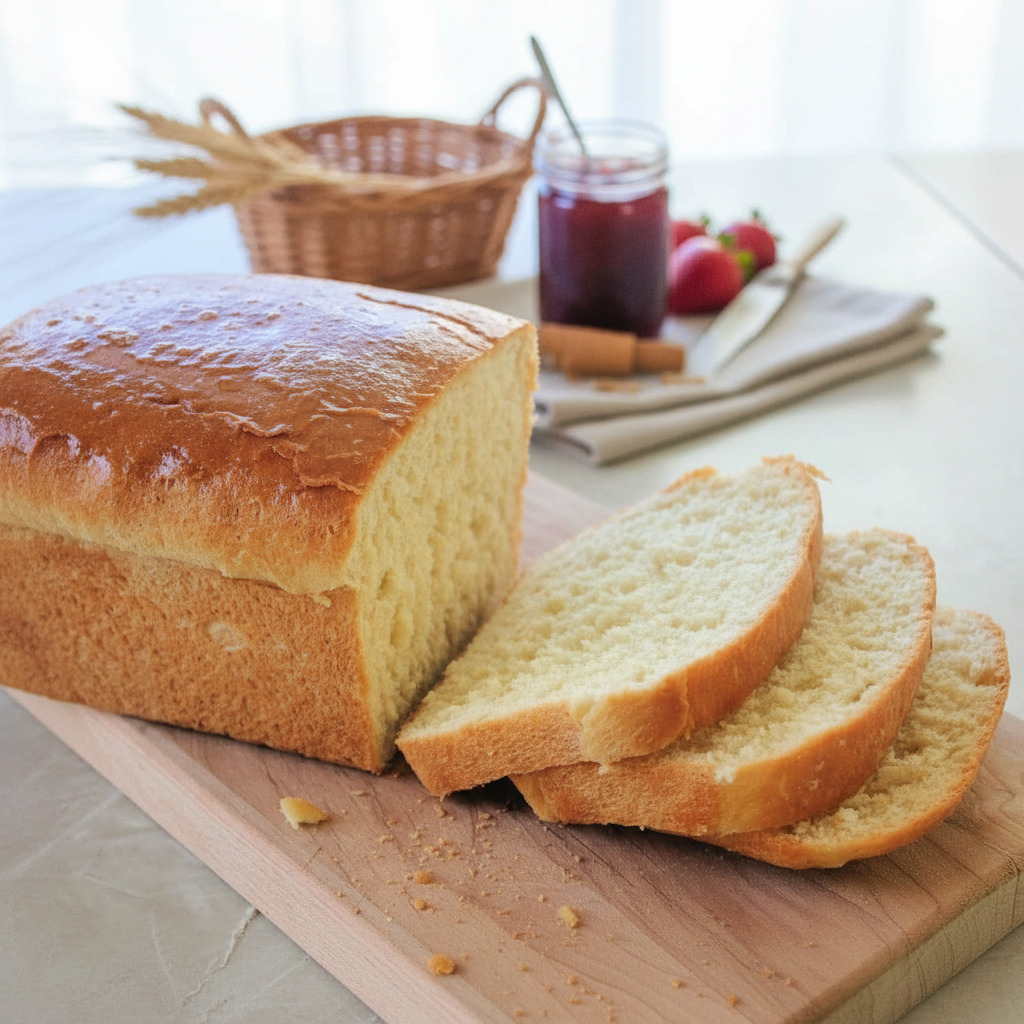
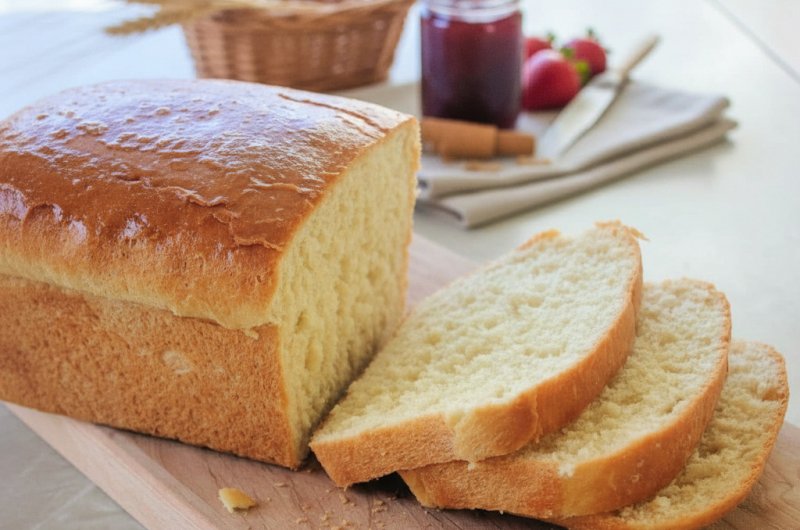
Amish White Bread is a classic homemade loaf with a soft interior, lightly sweetened flavor, and tender crust, perfect for sandwiches, toast, or everyday meals.
Key Ingredients
- 1 cup water, warmed to 110°F
- 1 pinch powdered ginger, optional
- 1 cup milk, warmed to 110°F
- ⅔ cup sugar
- 1½ tablespoons active dry yeast
- 1½ teaspoons salt
- ¼ cup vegetable oil or coconut oil
- 5½ cups bread flour, adjusted as needed
- 2 tablespoons butter, melted, for brushing
Tools Needed
- Large mixing bowl
- Measuring cups and spoons
- Wooden spoon or dough hook
- Stand mixer or clean work surface
- Two 9×5-inch loaf pans
- Pastry brush
Cooking Instructions
Step 1: Activate the Yeast
In a large bowl, dissolve the sugar in the warm water and warm milk. Add the yeast and powdered ginger if using. Stir gently and let the mixture sit for 5 to 10 minutes, until foamy and active. If no foam appears, the yeast may be inactive and should be replaced.
Step 2: Build the Dough Base
Stir 1 cup of bread flour into the yeast mixture until smooth. Add the salt and oil, mixing until fully incorporated.
Step 3: Add Remaining Flour
Gradually add the remaining flour, one cup at a time, stirring until the dough begins to pull away from the sides of the bowl. The dough should feel soft but not sticky. If it feels too wet, add flour 1 tablespoon at a time.
Step 4: Knead the Dough
Knead the dough using a stand mixer for about 5 minutes or by hand on a lightly floured surface for 8 minutes. The dough should become smooth, elastic, and slightly springy when pressed.
Step 5: First Rise
Place the dough in a lightly oiled bowl, turning once to coat the surface. Cover loosely and let rise in a warm place for about 1 hour, or until doubled in size.
Step 6: Shape the Loaves
Punch down the dough gently to release air. Turn it onto a work surface and knead for 3 minutes. Divide into two equal portions and shape into loaves. Place each loaf into a greased 9×5-inch pan and brush the tops with melted butter.
Step 7: Second Rise
Cover the pans lightly and let the dough rise for about 30 minutes, or until the tops rise about 1 inch above the rim of the pans.
Step 8: Bake
Preheat the oven to 350°F. Bake the loaves for 30 minutes, until golden brown. The bread should sound hollow when tapped on the bottom.
Step 9: Cool
Remove the loaves from the pans and cool on a rack. Brush with additional melted butter if desired. Allow to cool fully before slicing.
Why You’ll Love This Recipe
Soft texture ideal for sandwiches and toast
Simple ingredients that are easy to find
Light sweetness without overpowering flavor
Suitable for everyday baking
Free from preservatives and additives
Mistakes to Avoid & Solutions
Water or Milk Too Hot
Hot liquid can kill yeast.
Solution: Keep liquids close to 110°F and comfortably warm to the touch.
Adding Too Much Flour
Excess flour leads to dense bread.
Solution: Add flour gradually until dough is soft, not stiff.
Underproofing the Dough
Insufficient rise affects texture.
Solution: Allow dough to fully double during the first rise.
Overbaking
Baking too long dries the loaf.
Solution: Remove once golden and hollow-sounding.
Serving and Pairing Suggestions
Slice thick for breakfast toast with butter or jam
Use for sandwiches or grilled cheese
Serve alongside soups or stews
Cut into slices and serve family-style at the table
Storage and Reheating Tips
Store wrapped at room temperature for up to 3 days
Refrigerate for up to 5 days if needed
Freeze slices tightly wrapped for up to 2 months
Reheat slices briefly in the oven or toaster
FAQs
1. Can I reduce the sugar?
Yes, reduce by up to ¼ cup for a less sweet loaf.
2. Can I use all-purpose flour instead of bread flour?
Yes, though the texture will be slightly less chewy.
3. Why add powdered ginger?
Ginger supports yeast activity but can be omitted.
4. Can this dough be made by hand?
Yes, hand kneading works well with a little patience.
5. How do I know the bread is done?
The loaf should sound hollow when tapped and be evenly golden.
Tips & Tricks
Warm the bowl before adding dough for better rising
Brush with butter immediately after baking for a softer crust
Slice once fully cooled to avoid tearing
Use a kitchen thermometer for precise liquid temperatures
Recipe Variations
Honey Amish Bread
Replace ¼ cup sugar with honey and reduce liquid by 2 tablespoons.
Whole Wheat Blend
Substitute 2 cups of bread flour with whole wheat flour and add 1 extra tablespoon oil.
Milk-Rich Bread
Replace water entirely with milk for a richer crumb.
Final Thoughts
Amish White Bread fits naturally into the rhythm of our home, where baking is part of daily life rather than a special occasion. It rises quietly, fills the kitchen with a familiar scent, and waits patiently on the counter once cooled. Making it feels steady and purposeful, like tending to something that rewards attention without demanding urgency.
Slicing into a loaf later in the day often feels like returning to the morning itself. This bread supports meals without drawing focus, offering a simple presence at the table. In a home shaped by routine and small comforts, that kind of reliability feels meaningful.
Soft Amish White Bread
Course: BreakfastDifficulty: Easy2
servings25
minutes30
minutes2
hoursAmish White Bread is a classic homemade loaf with a soft interior, lightly sweetened flavor, and tender crust, perfect for sandwiches, toast, or everyday meals.
Ingredients
1 cup water, warmed to 110°F
1 pinch powdered ginger, optional
1 cup milk, warmed to 110°F
⅔ cup sugar
1½ tablespoons active dry yeast
1½ teaspoons salt
¼ cup vegetable oil or coconut oil
5½ cups bread flour, adjusted as needed
2 tablespoons butter, melted, for brushing
Directions
- Dissolve sugar in warm water and milk, add yeast, and let foam for 5 to 10 minutes.
- Stir in 1 cup flour, salt, and oil until smooth.
- Add remaining flour gradually until dough is soft and not sticky.
- Knead until smooth and elastic.
- Let dough rise, covered, until doubled.
- Punch down, divide, shape into loaves, and place in greased pans.
- Let rise again until slightly above pan rims.
- Bake at 350°F for 30 minutes until golden.
- Cool completely before slicing.